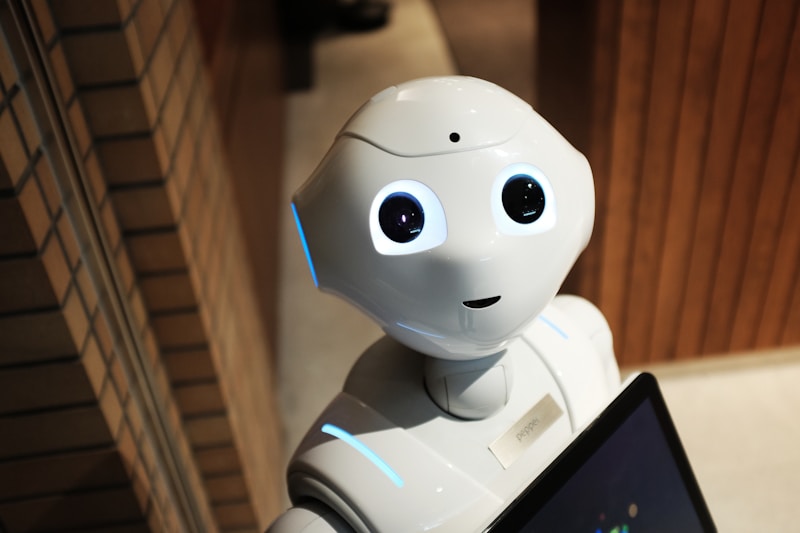
When I first started writing about artificial intelligence, the phrase "robotics" immediately conjured images of assembly lines, welding arms in automotive factories, and those creepy humanoid machines that wave at visitors at tech expos. And honestly, that's where most people's minds still go when they hear "robots." But let me tell you something I've learned over years of covering this space: the robotics revolution is happening everywhere except where most people expect.
The factory robot market is still massive, and yes, it's growing. But the most exciting developments in AI-powered robotics are happening in hospitals, on farms, in our homes, and in places humans can't even reach. I've watched this transformation unfold, and it's nothing short of extraordinary.
Last year, I visited a hospital in Shanghai where AI-powered robots were doing something I never expected: assisting in spinal surgeries. Not autonomously, mind you—at least not yet—but the precision these machines bring is genuinely mind-blowing. The surgeon controls the robotic arm, but the AI provides real-time feedback, correcting for hand tremors that even the steadiest surgeon can't completely eliminate.
But surgery is just the beginning. I've seen robots delivering medications in hospitals, reducing the workload on nurses who otherwise spend hours walking between wards. These aren't your Roomba-style delivery bots—they navigate complex hospital environments, waiting for elevators, avoiding patients in hallways, and even sanitizing themselves between deliveries.
Perhaps most surprisingly, I'm seeing AI-powered exoskeletons helping stroke patients relearn how to walk. These aren't science fiction anymore. They're real, they're helping people regain mobility, and they're getting better every single month.
Here's something that blows my mind every time I think about it: some of the most advanced AI robots on Earth aren't on Earth at all. They're on Mars.
NASA's Perseverance rover isn't just a remote-controlled car—it's making autonomous decisions every single day. It analyzes terrain, chooses which rocks to examine, and navigates around obstacles without waiting for instructions from Earth. The communication delay means waiting 20 minutes for a response isn't practical, so these robots have to think for themselves.
But it's not just space. I'm seeing AI robots exploring deep ocean trenches, investigating underwater caves where no human can survive, and mapping areas that would be too dangerous for divers. These machines can withstand crushing pressures, navigate in complete darkness, and make decisions about what worth examining.
For decades, we've been promised home robots. Remember that video of the robot that could pour a glass of water? It took ten minutes, and the water went everywhere. Fast forward to today, and we're still not quite at Rosie the Robot from The Jetsons—but we're getting closer.
What we do have are increasingly capable robot vacuums, which use AI to map homes, avoid furniture, and even empty their own dustbins. But I'm seeing something more interesting: robots designed specifically for elderly care. These aren't replacement humans—they can't fully replace human caregivers—but they can remind patients to take medication, detect falls, and alert family members when something seems wrong.
I've talked to developers working on companion robots for children with autism, robots that can play games, recognize emotions, and provide consistent, patient interaction. Is it the same as human interaction? No. But for some children, the consistency and patience of an AI companion provides real value.
If you want to see AI robotics in action, skip the tech conferences and visit a farm. Seriously.
I spent a day on a vineyard in California where AI-powered robots were pruning vines. These machines use computer vision to identify which branches to cut, making decisions that previously required decades of经验 (experience, in Chinese). The result? Better grapes, less waste, and a solution to labor shortages that have plagued agriculture for years.
But that's just one example. I'm seeing AI robots harvesting strawberries without bruising them, identifying and removing weeds without using herbicides, and even monitoring crop health at the individual plant level. These robots don't get tired, don't demand higher wages, and can work 24 hours a day during harvest season.
I don't want to paint an overly rosy picture. AI robotics face serious challenges. Battery life remains a limitation—most advanced robots can only operate for hours before needing to recharge. Real-world environments are messy, unpredictable, and far more challenging than controlled factory floors.
And then there's the cost. Advanced AI robots require sophisticated sensors, powerful processors, and complex mechanical systems. Until prices come down significantly, widespread adoption will remain limited.
There's also the jobs question. I've had countless conversations about whether robots will replace human workers. My honest opinion? In the short term, they'll augment humans more than replace them. The robot that assists in surgery doesn't eliminate the surgeon—it makes the surgeon more precise. The farm robot doesn't eliminate the farmer—it makes the farmer more productive.
If I look five to ten years ahead, here's what I see: AI robots will become increasingly autonomous, handling more complex tasks without human oversight. They'll become cheaper as technology improves and economies of scale kick in. And they'll become more specialized, designed for specific tasks rather than trying to be general-purpose machines.
We're also going to see more human-robot collaboration, where AI and humans work together, each doing what they're best at. Robots handling the repetitive, physically demanding tasks while humans focus on creativity, complex decision-making, and emotional connection.
The factory robot was just the beginning. The robotics revolution is just getting started, and I, for one, am excited to see where it goes.
AI in robotics isn't just about building smarter machines—it's about fundamentally changing what's possible. From healthcare to agriculture, from ocean exploration to our own living rooms, AI-powered robots are beginning to touch every aspect of our lives.
The question isn't whether robots will become more capable (they will). The question is how we'll integrate them into our world in ways that benefit everyone. That's a conversation we need to have, and soon.
What do you think? Are you excited about AI robots, nervous, or somewhere in between? I'd love to hear your perspective.