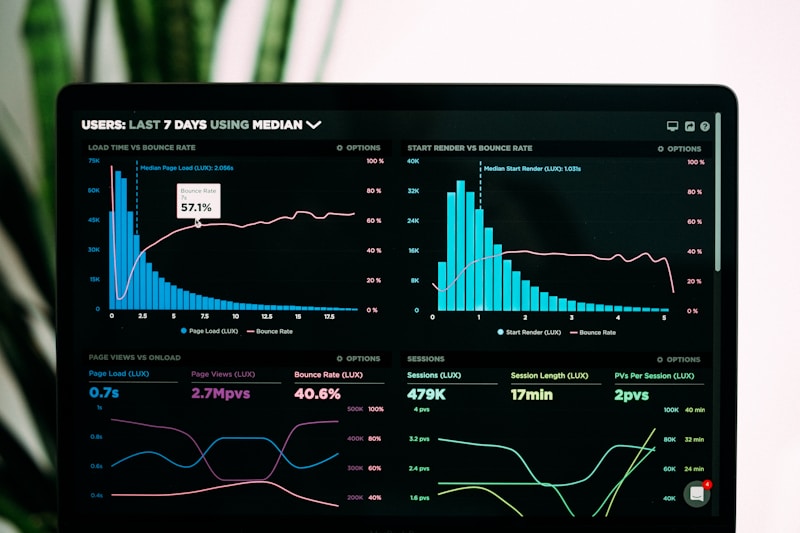
Let me tell you about the model that silently started failing over three months. No errors, no crashes—just gradual performance degradation. By the time we noticed, the model was practically useless. That's when I learned: if you're not monitoring your production models, you're flying blind.
Data Distribution Shift
The most insidious problem. Your training data represents the world at a point in time. The world changes. Customer behavior shifts. Economic conditions evolve. Your model's inputs gradually drift from what it was trained on.
This is called data drift or covariate shift. The solution: continuously monitor input distributions. When features start looking different from training data, it's a warning sign.
Model Performance Degradation
Even without data drift, model performance can degrade. The most important metric to track: actual outcomes. In production, you often know the truth after the fact.
For classification: track accuracy, precision, recall, AUC over time. For regression: MSE, MAE, R-squared. Set alerts when metrics drop below thresholds.
System Metrics
Your model runs on infrastructure. Monitor:
- Latency: Prediction time. Sudden spikes indicate problems.
- Throughput: Requests per second. Capacity planning needs this.
- Error rates: 5xx errors, timeouts, failures.
- Resource usage: CPU, memory, GPU utilization.
Prediction Distribution
Watch what your model outputs over time. If suddenly everyone is getting predicted as "fraud" when previously it was rare, something's wrong. Monitor:
- Mean and variance of predictions
- Class distribution for classifiers
- Prediction confidence/uncertainty
The Feedback Loop Problem
Here's a scary one: your model influences the data it receives. If your fraud model blocks transactions, future fraud patterns change. If your recommendation model shows certain content, user behavior shifts. Models can create feedback loops that degrade performance.
Setting Up Monitoring
My recommended approach:
- Start with system metrics (easy, valuable)
- Add prediction distribution monitoring
- Track actual outcomes when available
- Implement data drift detection
- Set up alerts with meaningful thresholds
Not monitoring production models is like driving with your eyes closed. You might be okay for a while, but eventually, you'll crash.