AI and IoT: When Everyday Objects Become Intelligent
Your thermostat knows when you're home. Your watch tracks your fitness. Your fridge orders milk when you're running low. This isn't science fiction—it's the Internet of Things powered by AI. Let me explain how this connected world works and why AI makes it so much smarter.
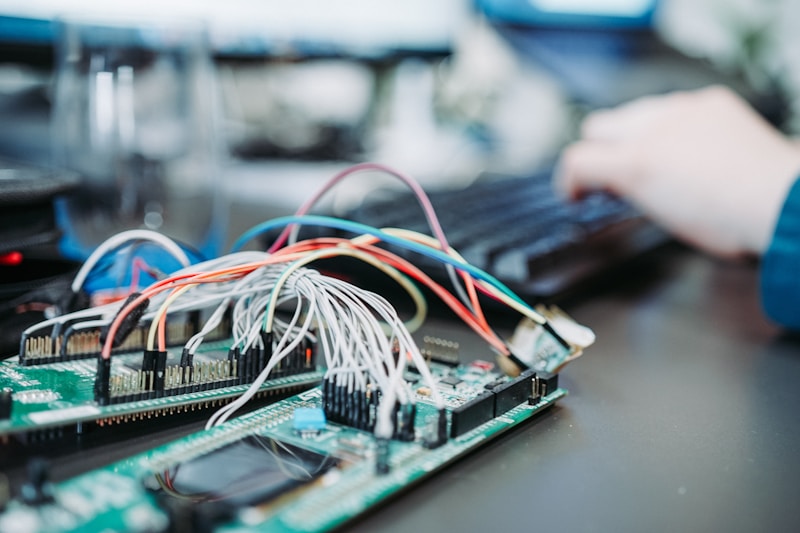
Understanding IoT and AI
The Internet of Things (IoT) refers to the network of physical devices—from thermostats to tractors—that collect and share data through the internet. Artificial intelligence adds the brainpower to make sense of all that data and take action.
Together, AI + IoT creates systems that can:
- Collect data - Sensors gather information about the environment
- Analyze patterns - AI identifies trends and anomalies
- Make decisions - Systems take action based on analysis
- Learn and adapt - AI improves over time based on experience
Smart Homes
Perhaps the most visible AIoT application is the smart home. AI-powered devices learn your habits and preferences to automate your environment.
Smart home AI capabilities:
- Learning thermostats - Devices like Nest learn your temperature preferences and schedule
- Smart lighting - Lights that adjust based on time of day and activity
- Security systems - AI that distinguishes between family members, visitors, and intruders
- Voice assistants - AI that controls your home through natural language
Did you know? The average smart home has over 20 connected devices, generating data that AI uses to create personalized experiences and automate routines.
Smart Cities
AIoT is transforming urban environments, making cities more efficient, sustainable, and livable:
- Traffic management - AI optimizes traffic signals to reduce congestion
- Smart parking - Finding available parking spaces in real-time
- Environmental monitoring - Tracking air quality and noise levels
- Public safety - AI-powered surveillance and emergency response
- Waste management - Optimizing trash collection routes and schedules
Healthcare and Wearables
AI-powered medical devices are revolutionizing healthcare:
- Continuous monitoring - Wearables that track vital signs 24/7
- Anomaly detection - AI that alerts you to concerning health patterns
- Remote patient monitoring - Doctors can monitor patients from afar
- Smart insulin pumps - AI that automatically adjusts insulin delivery
- Fitness tracking - AI that provides personalized health insights
Industrial IoT and Manufacturing
In industrial settings, AIoT enables the smart factories we discussed earlier:
- Predictive maintenance - AI predicts equipment failures before they happen
- Quality control - Computer vision catches defects in real-time
- Supply chain optimization - AI tracks and optimizes inventory
- Energy management - Smart systems reduce energy consumption
- Safety monitoring - AI that detects safety hazards
Agriculture and Environment
AI-powered agricultural technology is helping feed the world more sustainably:
- Precision farming - AI optimizes water, fertilizer, and pesticide use
- Crop monitoring - Drones and sensors monitor crop health
- Weather prediction - AI provides hyperlocal weather forecasting
- Soil analysis - Sensors analyze soil conditions in real-time
- Yield prediction - AI forecasts harvest quantities
Challenges and Considerations
AIoT brings significant challenges that need to be addressed:
- Privacy - Intimate data about our lives is being collected
- Security - Connected devices can be vulnerable to hacking
- Interoperability - Different devices and platforms don't always work together
- Data quality - AI is only as good as the data it receives
Conclusion
AI and IoT are converging to create an intelligent world around us—one where our devices work together seamlessly to make our lives easier, healthier, and more efficient. From smart homes to smart cities, from wearable health monitors to industrial robots, AIoT is transforming every aspect of our lives. The key is ensuring this technology develops responsibly, with privacy and security at the forefront.