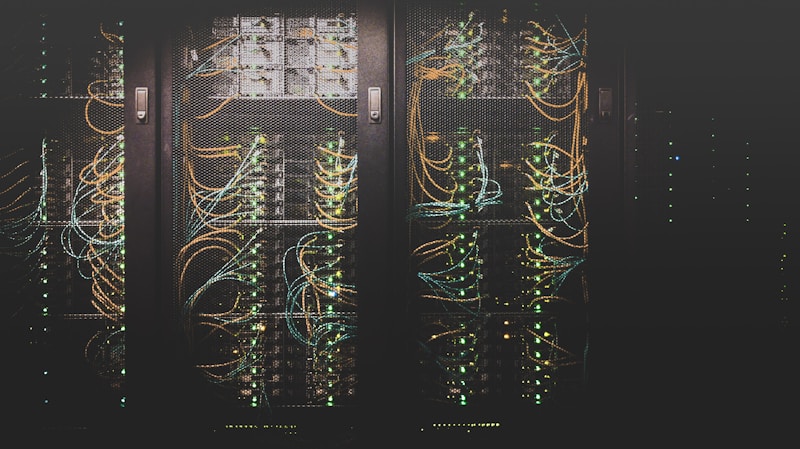
Training a state-of-the-art AI model today is like building a skyscraper—you can't do it with just one person's effort. Modern language models have hundreds of billions of parameters and require terabytes of data. Training them on a single machine would take centuries.
Enter distributed training: the art and science of spreading computational work across multiple machines, GPUs, and data centers. It's what makes possible everything from GPT-4 to the latest medical AI models.
The Basic Problem
Let me paint a picture. Say you want to train a large language model. You have billions of words of text, and your model has tens of billions of parameters. In a typical training run, you process thousands of text segments simultaneously, calculate how wrong the model's predictions were, and then adjust the model parameters to be slightly less wrong.
This involves a lot of math—specifically, matrix multiplications—and a lot of data movement. A single GPU might handle a few hundred billion operations per second. That sounds like a lot, but for training a frontier model, you need trillions upon trillions of operations.
Distributed training solves this by splitting the work across many GPUs working in parallel.
Data Parallelism: The Easy Win
The simplest form of distributed training is called data parallelism. Here's how it works:
- You copy your model to multiple GPUs
- Each GPU gets a different batch of training data
- All GPUs do forward and backward passes simultaneously
- You average the gradients (the model parameter updates) across all GPUs
- Each GPU applies the same averaged update to its model copy
It'selegant because the model stays the same— you're just processing more data per unit time. If you have 8 GPUs, you can theoretically train roughly 8 times faster.
But there's a catch: every few steps, the GPUs need to synchronize their gradients. As you add more GPUs, this communication becomes a bottleneck. Eventually, adding more GPUs gives you diminishing returns.
Model Parallelism: Splitting the Brain
When your model is too big to fit in a single GPU's memory, you need model parallelism—splitting the model itself across multiple GPUs.
Think of it like an assembly line. Instead of one GPU doing all the work for a given sample, different GPUs handle different "layers" of the model. The data flows through, with each GPU contributing its piece.
This is trickier than data parallelism because you need to carefully manage what data gets sent where, and when. Get it wrong, and your GPUs spend most of their time waiting for data instead of computing.
Pipeline Parallelism: The Assembly Line
Pipeline parallelism is a refinement of model parallelism that creates a continuous flow. Instead of waiting for one GPU to finish all its layers before passing to the next, the pipeline breaks the model into stages, and multiple samples are processed simultaneously at different stages.
It's like a factory assembly line: while GPU 1 is working on sample B's first layer, GPU 2 is working on sample A's second layer. This keeps everyone busy and maximizes efficiency.
Modern training frameworks like PyTorch's FSDP (Fully Sharded Data Parallel) and NVIDIA's Megatron use sophisticated combinations of all these techniques.
Tensor Parallelism: Going Deeper
For really massive models, even pipeline parallelism isn't enough. Tensor parallelism takes the matrix multiplications themselves and splits them across GPUs.
Here's a simplified view: when you multiply two large matrices, you can split them into chunks, compute each chunk on a different GPU, then combine the results. It's like having multiple people each solving a piece of a puzzle, then putting the pieces together.
This is what allows companies to train models with hundreds of billions of parameters—the computation itself is distributed at a granular level.
The Communication Challenge
Here's the dirty secret of distributed training: the GPUs spend a lot of time talking to each other. And communication is always slower than computation.
"In distributed training, the challenge isn't usually making the GPUs compute faster—it's making them wait less for each other."
This is why companies invest heavily in high-speed interconnects like NVIDIA's NVLink. The faster GPUs can share data, the more efficiently they can work together.
There's also a whole science to gradient compression—sending slightly compressed gradients that can be decompressed on the other end without losing much accuracy. It sounds like a hack, but it genuinely helps.
Fault Tolerance: When Things Break
In a cluster of thousands of GPUs, something is always breaking. A GPU fails, a network cable goes bad, a server overheats. A naive training system would crash and lose hours or days of work.
Modern distributed training systems are built to be resilient. They checkpoint regularly—saving the model's state to persistent storage—so that if something fails, training can resume from the last checkpoint. Some systems can even automatically reroute work around failed hardware.
This is one reason why cloud-based training is so popular: cloud providers have massive infrastructure teams dedicated to keeping things running.
Energy and Cost: The Hidden Expenses
Let's talk about money. Training a large language model can cost tens of millions of dollars. A significant portion of that goes to electricity—running thousands of GPUs generates enormous heat and power consumption.
This has sparked interest in more efficient training methods. Techniques like mixed-precision training (using lower-precision numbers for most calculations) can dramatically reduce both computation time and energy usage. So can better optimization algorithms that require fewer steps to converge.
Who Does This?
Pretty much every major AI lab. OpenAI, Google DeepMind, Anthropic, Meta—they all run massive distributed training clusters. The largest ones have tens of thousands of GPUs working in concert.
But you don't need to be a tech giant to benefit. Smaller companies can use cloud services that provide distributed training infrastructure. AWS, Google Cloud, and Azure all offer GPU clusters, and services like Lambda Labs and CoreWeave specialize in providing high-performance GPU infrastructure.
The Future
As models continue to grow, so will the need for sophisticated distributed training. But there's a counter-trend emerging: making models more efficient so they require less distributed computation in the first place.
Techniques like knowledge distillation (training a smaller model to mimic a larger one), quantization (using fewer bits to represent numbers), and architecture improvements (like Mixture of Experts) all aim to get more performance from less computation.
The field is evolving rapidly. What was cutting-edge two years ago is standard practice today. If you're building AI systems, understanding distributed training isn't just nice to have—it's becoming essential.
Final Thoughts
Distributed training is one of those invisible marvels of modern AI. Most people never think about the thousands of GPUs working in concert to train the models they interact with. But without it, none of the AI breakthroughs we've seen in recent years would be possible.
Whether you're training your own models or just using AI services, you're benefiting from decades of work in distributed systems. And as AI continues to advance, this invisible infrastructure will only become more critical.