I'll be honest with you: the gap between a cool AI model in a Jupyter notebook and a reliable production system is enormous. I've seen brilliant models that work flawlessly in development completely fall apart in the real world. Let me share what I've learned about bridging that gap.
The Reality of Production AI
In your notebook, you control everything: the input data format, the processing pipeline, even the users (probably just you). In production, you're dealing with unpredictable inputs, the need for real-time responses, system failures, and users who expect things to just work.
The first step is accepting that your notebook code is not production code. It needs transformation.
Building a Model API
The most common deployment pattern is wrapping your model in a REST API. Flask and FastAPI are popular choices in Python. FastAPI is particularly nice because it automatically generates documentation and handles type validation.
Your API needs input validation (never trust user input), error handling (things will go wrong), and logging (you need to know what's happening). These aren't optional extras—they're essential.
Model Serialization
You need to save your trained model in a format that can be loaded later. For scikit-learn, that's typically joblib or pickle. For PyTorch, you save the state_dict. For TensorFlow, SavedModel format is the standard.
Always version your models. Trust me on this—when something breaks at 2 AM and you need to roll back, you'll want to know exactly which model version was running.
Containerization with Docker
Docker has become essential for AI deployment. It packages your model, all its dependencies, and the serving code into a single unit that runs consistently anywhere. No more "it works on my machine" problems.
A typical Dockerfile for an AI API includes the base Python image, your requirements.txt, your model files, and the startup command. Keep the image size down—fewer layers mean faster deployments.
Infrastructure Options
You have several paths forward:
- Cloud services: AWS SageMaker, Google Vertex AI, Azure ML handle infrastructure for you
- Kubernetes: For scale and reliability, but requires more expertise
- Serverless: AWS Lambda, Google Cloud Functions for occasional traffic
- Edge deployment: TensorFlow Lite or ONNX for devices
Monitoring is Everything
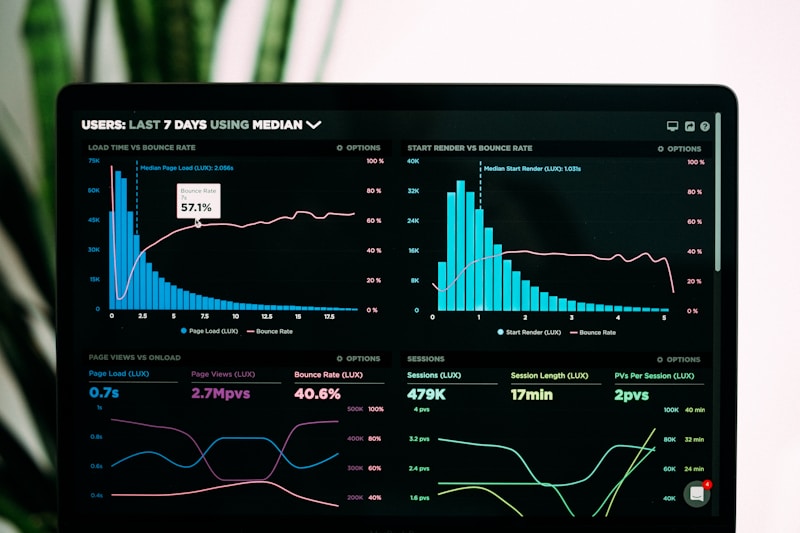
Here's what nobody tells you: deployment is just the beginning. You need to monitor prediction latency, model accuracy over time, input data distribution, and resource usage. When model performance degrades, you need to know—before users complain.
The transition from notebook to production is challenging, but it's also where your AI work creates real value. A model that only runs in a notebook is a science project. A model serving real users is a product.