As someone who's always been fascinated by the night sky, I'm thrilled by how AI is transforming astronomy. From discovering new planets to unraveling the mysteries of black holes, artificial intelligence is helping us explore the universe in ways we never thought possible.
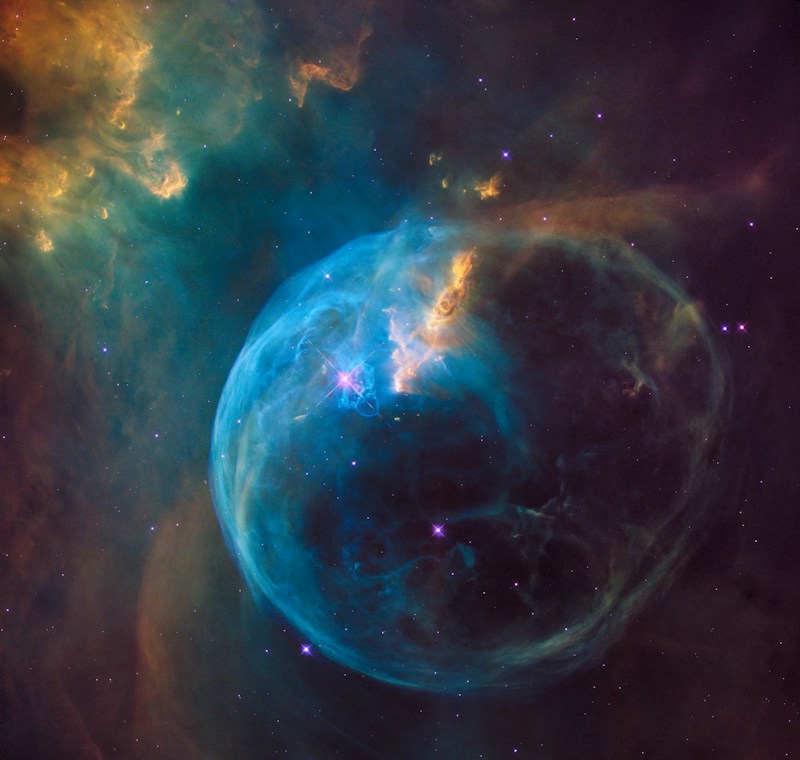
Modern telescopes and space probes generate more data in a single day than astronomers could analyze in a lifetime. The Square Kilometre Array, for example, will produce more data annually than the entire internet traffic of 2015. Making sense of this data flood is where AI shines.
AI algorithms can process millions of observations, identify patterns, and flag interesting phenomena that human researchers might miss. This isn't about replacing astronomers—it's about giving them superhuman tools to do their jobs better.
One of the most exciting applications of AI in astronomy is finding exoplanets—planets outside our solar system. NASA's Kepler mission alone discovered thousands of candidate planets, but analyzing all that data required machine learning.
AI helps find exoplanets by:
Before AI, classifying galaxies was slow, manual work. Now, neural networks can classify millions of galaxies in seconds, sorting them by shape, size, and other characteristics.
AI galaxy classification includes:
When LIGO detected gravitational waves for the first time in 2015, it opened a new way to observe the universe. AI is now essential for analyzing these faint signals from colliding black holes and neutron stars.
AI applications in gravitational wave astronomy:
AI is also essential for navigating spacecraft and creating detailed maps of celestial bodies. From rovers on Mars to probes exploring the outer planets, AI helps make missions possible.
AI in space navigation includes:
One of the ultimate questions in astronomy is: are we alone? AI is playing a crucial role in the search for extraterrestrial intelligence (SETI).
AI in the search for alien life:
AI isn't just analyzing real data—it's also helping us simulate cosmic evolution. These simulations help us understand how galaxies form, how dark matter behaves, and how the universe evolved.
AI-enhanced simulations can:
Looking ahead, AI will become even more central to astronomical research:
AI is transforming astronomy from a data-limited science to a data-driven one. By processing massive datasets, identifying patterns, and making predictions, AI is helping astronomers make discoveries at an unprecedented pace.
The cosmos is vast and full of mysteries. AI gives us the tools to finally start answering some of humanity's oldest questions: Where do we come from? Are we alone? What is the nature of the universe? The answers may be closer than ever before.