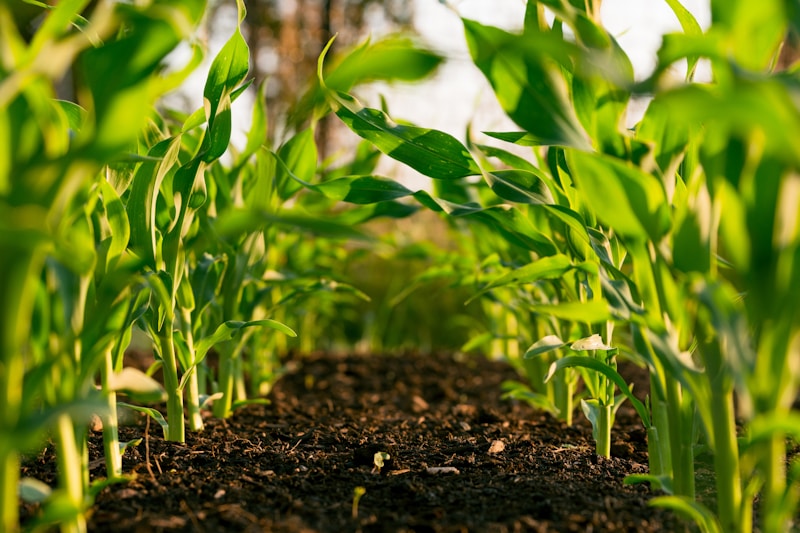
I grew up in a small town where my grandfather farmed corn and soybeans. Every summer, I'd visit the farm and watch him walk the fields, checking on crops, looking for problems. It was slow, methodical work—decades of经验 (experience, in Chinese) distilled into patterns only he could read.
Last year, I visited a modern farm and saw something that would have blown my grandfather's mind: drones flying over fields, analyzing crop health in real-time. Autonomous tractors driving themselves. AI systems that could identify diseases before any human could see them. The farm had changed—fundamentally, technologically—but the end goal was the same: grow food.
AI in agriculture isn't just about cool technology—it's about solving real problems. We need to feed more people with less land, less water, and fewer inputs. And AI is starting to deliver.
Here's the problem: by 2050, the world will need to feed nearly 10 billion people. But we're running out of arable land, water is becoming scarcer, and climate change is making farming harder. We can't just farm more—we have to farm smarter.
Traditional agriculture is inefficient. Farmers typically treat entire fields uniformly—same watering, same fertilizer, same pesticides. But fields aren't uniform. Some areas need more water, some less. Some have pest problems, some don't. Uniform treatment wastes resources and often produces suboptimal results.
AI enables precision agriculture—treating each plant or small area according to its specific needs. It's the difference between giving everyone the same medicine and giving each person exactly what they need.
Crop Monitoring: Drones and satellites equipped with multispectral cameras can analyze crop health across thousands of acres. AI identifies areas of stress, disease, or pest damage—often before problems are visible to the human eye. This allows farmers to intervene early, when treatment is most effective.
Predictive Analytics: AI models analyze weather data, soil conditions, historical yields, and other factors to predict outcomes. How much will this year's harvest yield? When's the best time to plant? What will the price be? These predictions help farmers make better decisions.
Autonomous Machinery: Self-driving tractors and harvesters are already operating on farms. They can work around the clock, with greater precision than human operators. This addresses labor shortages while improving efficiency.
Resource Optimization: AI-controlled irrigation systems deliver water exactly where needed, reducing waste. Precision spraying systems apply chemicals only where needed, reducing costs and environmental impact.
Disease Detection: Computer vision systems can identify plant diseases from photos—sometimes more accurately than expert plant pathologists. This speeds diagnosis and enables targeted treatment.
I've seen numbers from farms using AI, and they're impressive. Some precision agriculture operations report yield improvements of 20-30% while using 20-30% less water and inputs. That's not trivial—that's the difference between profit and loss for many farmers.
In vineyards I've read about, AI systems monitor grapes throughout the growing season, predicting optimal harvest time based on sugar levels, flavor compounds, and weather forecasts. The result: better wine. (Yes, AI-made wine is actually a thing, and some of it's quite good.)
In greenhouse operations, AI controls temperature, humidity, lighting, and CO2 levels to maximize growth while minimizing energy use. These systems can operate with minimal human intervention, producing consistent results regardless of external conditions.
Don't get me wrong—AI in agriculture faces real challenges.
Infrastructure: Many farms, especially in developing countries, lack the internet connectivity and technical infrastructure needed for sophisticated AI systems. Getting data from fields to clouds to models and back is still difficult in remote areas.
Cost: Sophisticated AI systems require expensive sensors, drones, and equipment. While prices are falling, the upfront investment is still significant. Small farmers may struggle to afford these tools.
Technical Knowledge: Operating AI systems requires skills that many farmers don't have. Training and support are essential but often lacking.
Data Limitations: AI models need data to learn, and agricultural data is often fragmented, inconsistent, or simply unavailable. Each farm is different, and models trained on one type of farm may not transfer well to others.
Looking ahead, I'm optimistic. Several trends are converging to accelerate AI adoption in agriculture.
First, costs are falling. What required a $50,000 drone five years ago can now be done with a $1,000 system—or even a smartphone. Accessibility is improving.
Second, edge computing is enabling AI to run on devices without constant cloud connectivity. This addresses the infrastructure challenge in remote areas.
Third, we're seeing more specialized solutions. Rather than general AI tools, companies are building systems specifically for agriculture—understanding the unique patterns and challenges of farming.
Fourth, climate change is creating urgency. As weather becomes more unpredictable, farmers need better tools to adapt. AI provides those tools.
Walking through that modern farm, seeing drones and AI systems at work, I thought about my grandfather. He would have been amazed—but I think he would have also appreciated the fundamental continuity. The goal is still growing food, feeding people, working with nature. The tools have changed, but the purpose hasn't.
AI in agriculture isn't about replacing farmers—it's about giving them better tools. Better information, better predictions, better control. The farmer who understands both agriculture and technology will have advantages that previous generations couldn't imagine.
And maybe someday, when my grandchildren visit farms, they'll see AI systems that would blow my mind—farms that are more productive, more sustainable, and more resilient than anything we have today. That's a future worth working toward.